Key Takeaways
- Follow a clear, seven-step process to identify and confirm Medicare doctors after the PSHB transition.
- Stay proactive by keeping documentation updated and reviewing annual plan changes.
In 2026, finding the right Medicare doctors as a federal retiree starts with understanding the new PSHB landscape. With the PSHB transition now complete, simple and organized steps help ensure you keep access to trusted healthcare providers.
What You’ll Need Before You Start
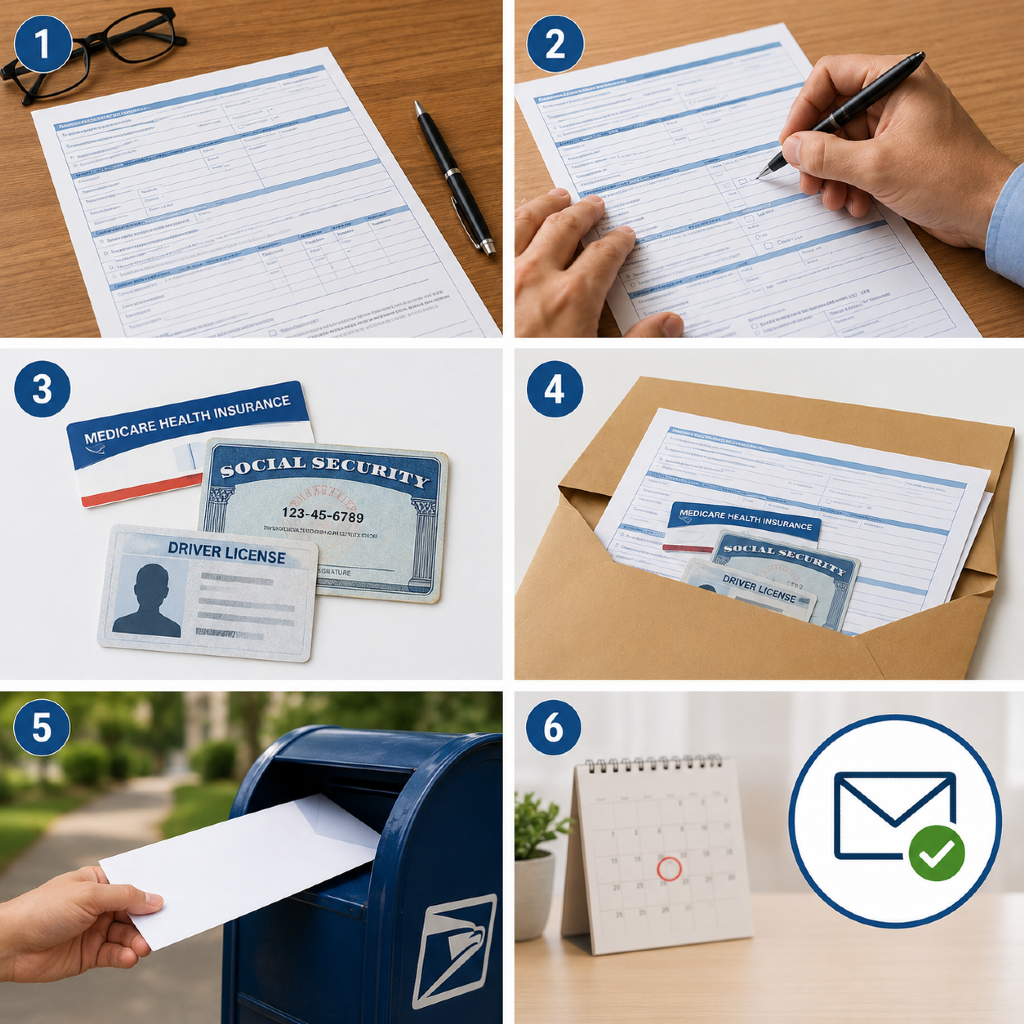
List of documents to gather
Before starting your search for a Medicare doctor, gather these important documents:
- Your PSHB plan card and booklet
- Your Medicare card (showing Part A and Part B, if enrolled)
- A recent list of your medications
- Records of your current and previous healthcare providers
- Any recent medical statements or visit summaries
Having these on hand will make each step in the process smoother.
Where to find your PSHB and Medicare info
You can find your PSHB plan details in your health plan packet, online through your carrier’s member portal, or in mailed materials from the Office of Personnel Management (OPM). Medicare coverage information is available in your “Medicare & You” handbook and on the official Medicare website. Your Social Security profile can also confirm your current Medicare enrollment.
Step 1: Understand PSHB and Medicare Changes
PSHB program basics for 2026
The Postal Service Health Benefits (PSHB) Program, fully implemented in 2025, has replaced previous FEHB coverage for United States Postal Service retirees and their eligible family members. For 2026, you’ll use your PSHB plan for health coverage, and in most cases, combine it with Medicare if you’re eligible and enrolled.
Medicare coverage integration overview
Your PSHB plan now works alongside Medicare Part A and Part B. Medicare usually pays first for covered services, while your PSHB plan may cover additional costs, like copayments or coinsurance. Understanding this coordination helps you choose doctors who accept both Medicare and your PSHB coverage for lower out-of-pocket costs.
Step 2: Review Your Updated Plan Details
How to access your PSHB plan booklet
Check your mail or email for the most recent PSHB plan booklet. You can also download it from your plan’s website or access it by calling your plan’s customer support line for assistance.
Key terms to identify in your plan
Look for sections labeled “Provider Directory,” “Network Coverage,” and “Medicare Integration.” Review definitions for key terms like “in-network,” “out-of-network,” “participating provider,” and “coordination of benefits” so you know exactly what you’re searching for when you look up a doctor.
Step 3: Use Physician Locator Tools Online
Where to find CMS Medicare tools
The official Medicare.gov Physician Compare tool is a trusted resource for finding doctors who accept Medicare. Your PSHB plan’s online directory can also help you see if a doctor is in their network and accepts Medicare patients. OPM and many PSHB providers offer links and search functions specifically tailored for plan members.
Tips for narrowing your search results
Refine your search by entering your city or ZIP code, specialty, and type of service needed. Use the filters provided to find doctors accepting new Medicare patients. Double-check each doctor’s credentials and look for any notes about language spoken, office accessibility, or telehealth options.
Step 4: Confirm Doctor Participation for 2026
How to verify a provider’s status
Call the doctor’s office directly and ask if they take both Medicare and your specific PSHB plan. Sometimes, online directories may have outdated information, so it’s always best to verify in person or by phone.
Questions to ask doctor’s offices
When speaking with the office staff, ask:
- “Do you accept Medicare patients in 2026?”
- “Are you part of my PSHB plan’s network?”
- “If not, what are my options for seeing you as a patient?”
Take notes during the call for your records and follow up with your plan if there’s any confusion.
Step 5: What If My Doctor Is Not In-Network?
Options for continuing with out-of-network care
If your preferred doctor is out-of-network or does not accept Medicare, review your plan’s terms for seeing out-of-network providers. Some plans offer coverage at a higher cost, while others may not cover out-of-network services at all. Always check what your share of the costs will be.
How to find alternative Medicare providers
If you need to change doctors, use Medicare’s and your PSHB plan’s directories to create a shortlist of in-network options. Ask for recommendations from friends, family, or local support groups, and look for providers with experience supporting federal retirees.
Step 6: Schedule an Appointment Successfully
Steps to schedule a first visit
Contact your chosen doctor’s office and explain that you are a new Medicare and PSHB patient. Provide the office with your insurance details over the phone if possible, to check eligibility before your appointment is booked.
Information to bring to your appointment
Bring your:
- PSHB and Medicare cards
- A valid photo ID
- Up-to-date medication list
- Any recent medical documentation
- Notes on your past healthcare or questions you’d like to ask
Having this information ready helps your provider deliver care without delay.
Step 7: Keep Track of Annual Plan Changes
Where to find annual updates
OPM and your PSHB plan provide annual notices each fall. Carefully review these materials for any changes in provider networks, covered services, or coordination with Medicare.
Why reviewing plan changes matters
Provider networks, drug coverage, and costs can change year-to-year. By reviewing updates, you’ll know if your preferred doctors or services remain available and what actions you may need to take to maintain uninterrupted care.
How Do I Protect My Doctor Choices?
Tips for ongoing provider access
Keep a yearly checklist to confirm your providers’ participation with both Medicare and PSHB. Maintain contact with your doctor’s office, and ask about any anticipated network changes. Keep your insurance cards and documents organized and up-to-date.
Staying informed about future transitions
Sign up for email alerts from OPM, Medicare, or your PSHB plan to get the latest updates. Participation in local retiree or advocacy groups can also help you stay informed and share tips with others experiencing similar transitions.